
2026-09-07 · Wallion
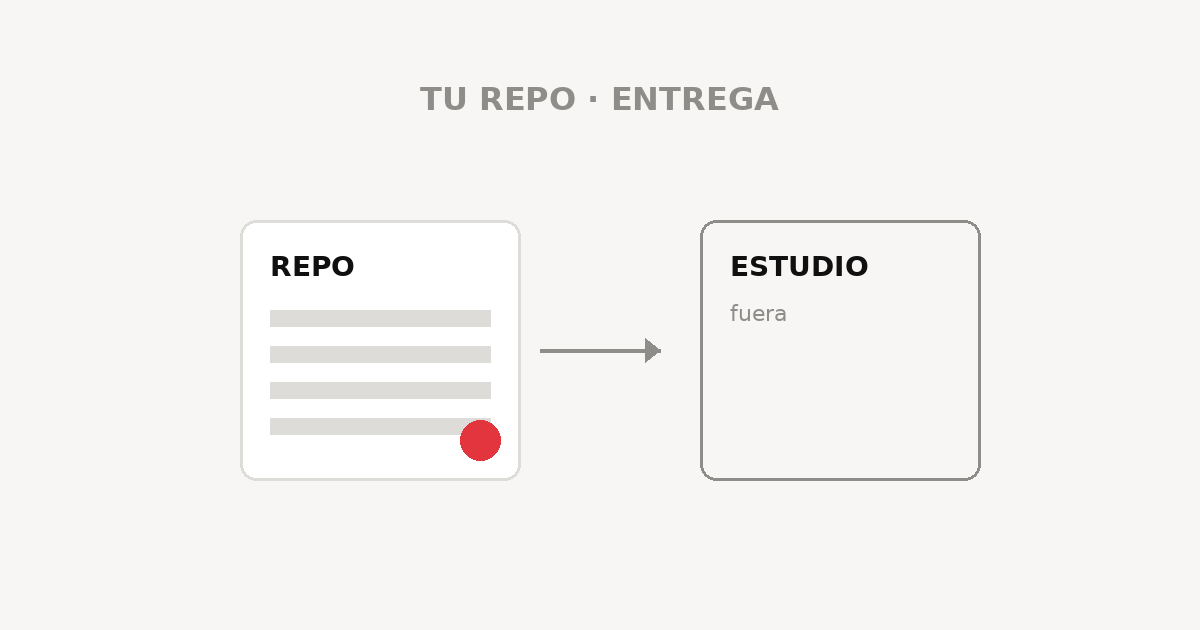
“The code is yours” appears in almost all the proposals. It doesn't mean the same thing twice.
Sometimes it means: the repo has been on your GitHub since day one and you have admin privileges. Sometimes: you license the software, use it, and someone is still responsible for getting it up and running on Monday. Sometimes: a PDF with "PI release" while the repo remains in the vendor's account and no one in your team can deploy.
The question before signing isn't "who owns the intellectual property in the abstract?". It's: who has admin privileges, who's responsible when things go wrong, and what do you get if the relationship ends?
This page is not the offer. It's the purchasing criteria. The offer of custom software (tools: /software/herramientas-internas). If the lock is the number, the public table is in How much does custom software cost in 2026?.
Three models (without theater)
1. Full transfer of the code.
The repository is yours. You (or whoever you hire later) maintain, deploy, and provide support when it fails. The studio delivers and leaves—or charges extra for maintenance. This makes sense if you have an in-house technical team (or real React/Node capabilities) and want the asset on your balance sheet as something you can access without permission.
The price is usually higher than a responsible licensing model because the studio relinquishes operational ownership of the risk. If you close the licensing agreement and don't have anyone who knows how to deploy the software, you haven't bought independence: you've bought a zip file and a debt.
2. License to use + studio responsibility.
You use the software. The studio retains the code and remains responsible for its functionality. Construction typically costs a fraction of a full agency-with-leaseback budget, because someone is left on the other end when things don't get off the ground on Monday.
This isn't "renting a generic SaaS." It's software built for your workflow, with a contract that clearly outlines what the license includes and what happens if the studio goes out of business. Ask about escrow, exportable data, and conditional access to the repository. If there's no written answer, it's not a model; it's wishful thinking.
3. Third-party platform with your brand.
It's not custom software. It's someone else's product with your skin. The code isn't the issue: the vendor's price ceiling is. If they change the plan, the API, or the price tomorrow, your "tool" will change with them.
If you don't know which of the three you're under, you're not buying the same thing. Comparing a fixed license fee with a fixed full transfer fee as if they were the same product is the most expensive mistake you can make.
What does this look like in a small business in Barcelona?
Many small and medium-sized businesses in the metropolitan area don't have an IT department. There's a founder who still signs off on budgets, someone in administration with a spreadsheet that's "almost working," and a partner (consultant, ERP, A3-style software) who quotes the next module when the Excel spreadsheet runs out.
At that table, “the code is yours” sounds like control. Without an admin, without a pipeline, and without anyone reading the logs, it's just a PDF. If the partner quotes a full license and the number seems like a large study, ask in month two: Who patches it? Who deploys it? Who pays when the bank's API changes?
Wallion often speaks with this type of client: a specific flow (not "digitizing the company"), a fixed price, and whether you need the repo in your organization or someone to vouch for its functionality. No fabricated clients or volumes: the pattern is the actual table, not the success story.
If you already have React/Node capabilities and want the asset to iterate without a license, a full license is usually the right purchase—even if the build number is higher. Without that team, the "asset" in a repository that no one visits is just insurance you don't know how to use.
Failure modes (those you have already seen, or will see)
Repo in the supplier's account.
You sign. The code "is yours" in the contract. For an export, someone has to invite you. If they're on leave, you wait. Admin ≠ "we'll send it to you when you ask.".
PDF of “assignment” without admin.
The paper transfer doesn't work. Without admin access to the repository, secrets, and hosting, it's just a headline. Ask who has admin access on the first milestone day, not the legal deadline.
The studio disappears.
Any model can fail. Is there source code escrow? Is it executable or only "available upon request"? Data without favors? Is it a Runbook or just a zip file?
Mixing license and assignment in the same sentence.
“We’ll give you the code, and there’s also a monthly license,” without clarifying what’s what. If the price includes one thing and the PDF another, the conflict arises in month twelve. One sentence, one template. If there are two, two prices.
Escrow that is never executed.
“"There is escrow" without a deposit, third party, or release conditions. Unexecuted escrow = no escrow. Ask for the mechanism, not the adjective.
These flaws are the difference between an asset and a link.
What Wallion does (and when not to buy it)
Wallion builds custom software at a fixed price. In the standard model, the studio retains the working code and is responsible for its functionality—according to the project contract, not some slogan on this page: that's why an internal tool/workflow costs a fraction of a full agency agreement, and that's why the monthly license exists. Workflow offer: internal tools.
Model, in a nutshell: the studio usually keeps the operating code, you license its use, Wallion is responsible for ensuring it starts up according to the contract, and the data is exportable as agreed. Ownership of the code and any escrow deposits are set out in the project contract, not on this website. Ask for the mechanism on the call — not the slogan.
That's not "better" in the abstract. It's a model. It fits when:
- You don't have an internal team that can maintain React/Node in production.
- You want a live flow (internal tool, bridge, panel) and someone on the other side of the ticket.
- You prefer a fixed construction fee plus a license to a high fixed transfer fee that nobody then operates.
Don't buy the Wallion model when:
- You already have React/Node capabilities and want the repository in your org from day one, with your own admin, to iterate without a license. Then request a full license transfer (or a different assignment): the scope and price will change.
- What you need is a standard SaaS product with your branding. That's model 3, not custom-made.
- You want "the code is mine" as a marketing slogan, but at the same time you don't want to pay for either the transfer of ownership or a responsible license. That's not a model. It's wishful thinking.
If you say "we need full transfer" during the call, it should be stated in the first conversation. It's not hidden in the FAQ.
Public prices (Option D — without inventing other figures)
Only the figures that live on the site:
- Diagnosis — €1,900. Audit of a workflow, prototype, and fixed budget. If you proceed, the diagnostic cost will be deducted from the construction cost.
- Construction — €6,900–€14,900. An internal tool: a workflow, after the Diagnosis. It's not the price of a large app, an MVP, or staffing: those will be... price fixed in writing, No to that band.
- License — from €390/month. Hosting, security updates, regulatory and API changes, hour cap for minor changes, business hours support — as published in the offer.
Apps, MVPs, and staffing: same scope model + fixed number, another figure, in writing. This page doesn't create rates. Table and nuances: How much does custom software cost in 2026?.
Decision list (before signing)
Check each box. If any are left blank, do not sign "the code is yours".
- Which model are we using: full transfer, license + responsibility, or third-party platform?
- Where does the repo live on the day we pay the first milestone?
- Who has admin privileges (repo, secrets, hosting) on that same day?
- If we end the relationship, what do we get: code, data, both, neither?
- Is there source code escrow in the contract — and is it executed or just promised?
- Is the data exportable without asking for a favor?
- Does the price include assignment or license? Does the same phrase conflate both?
- Who's responsible on Monday if it doesn't start — us or the studio?
- If we don't have React/Node equipment, does the full transfer leave us operational or stuck?
- If we buy license + liability, what does the month include and what's a big change with a new fixed-term contract?
Without those answers, “the code is yours” is just marketing.
Questions that buyers do ask
If Wallion keeps the code, am I not tied down?
You're bound by the contract, not some mystery. Data can be exported as agreed. Escrow is only available if the contract stipulates it and it's been executed. Ask about the mechanism during the call, not the slogan.
Why don't I just buy the code directly?
Because the cost of building the business, in the standard license + liability model, is a fraction of what a full agency transfer usually costs: the studio retains the operating code and the responsibility for ensuring it functions according to the contract. If you prefer the asset within your organization and have someone to operate it, request a transfer—change the number.
What does the license include starting from €390/month?
The offer includes: hosting, security, regulatory and API updates, a limit on minor changes, and support during business hours. Anything that can't go down is handled through third-party managed services. For major changes, the budget is fixed within days, not subject to endless renegotiation.
Is the €1,900 diagnostic lost if we don't continue?
If you continue, it's deducted from the build cost. If you don't continue, you've paid for a diagnostic with a prototype and a written fixed price—not an empty deck. It's not a lead magnet.
Does the €6,900–€14,900 price range cover an app or an MVP?
No. That band is an internal tool/process after the Diagnosis. Apps, MVPs, and staffing: fixed price in writing, not that table.
Can we have the repository in our org and license at the same time?
Don't mix up models in one sentence. If the repository is yours with admin privileges and you assign it, that's an assignment. If Wallion retains the code and you license it, that's a license model. Request one. The price follows the model.
What happens if the studio disappears?
That's why escrow and exportable data are discussed in the contract — not in a marketing PDF. Ownership of the code and any escrow deposits are set out in the project contract, not on this website. "Available" escrow without execution does not count: ask how it is deposited and when it is released.
Do Wallion Mobility, Glowapp, or Nummo fit into this category?
No. These are not Wallion products from this service. This page discusses ownership of the code in the studio's custom software, not those brands.
What this page is not
It's not the offer. The offer is in /software (internal tools).
It doesn't publish made-up rates. Public prices are available on the site — see How much does custom software cost in 2026?.
It does not promise ownership or escrow on the website: Ownership of the code and any escrow deposits are set out in the project contract, not on this website.
It does not mention Mobility, Glowapp or Nummo as Wallion products.
It is not a ranking of the “best studios in Spain”.
Thirty minutes
If the lock is the property of the code, say so in the first conversation — model, admin, escrow, price. Book a 30-minute call.